


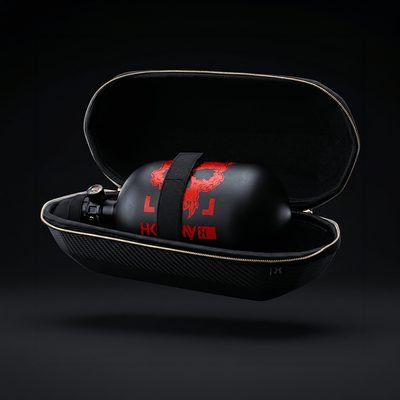

Let's be real - when you're first getting into paintball, the tank question can feel overwhelming. CO2 or HPA? 48ci or 68ci? 3000 psi or 4500 psi? Carbon fiber or aluminum? There's a lot of noise out there, and most of it assumes you already know what you're doing.
You don't have to. We've got you.
Here's everything you need to know about picking the right paintball tank, broken down in plain English.
First Things First: HPA, Not CO2
If you're shopping for a tank in 2024 and beyond, the answer is almost always HPA (High Pressure Air). Here's why:
CO2 is cheaper upfront, but it comes with real trade-offs. CO2 is temperature-sensitive — on a cold morning, your velocity will drop. On a hot afternoon, it climbs. That inconsistency messes with your accuracy and can put stress on your marker's internals over time. Most modern mid-range and high-end markers aren't even designed to run CO2 well.
HPA runs at a consistent pressure regardless of temperature, which means your shots are more consistent, your marker performs the way it's supposed to, and you're not fighting your equipment on the field.
Bottom line: Get an HPA tank. Save yourself the headache.


The Two Big Numbers: Size and Pressure
When you're shopping for HPA tanks, you'll see two specs that matter most: volume (ci) and pressure (psi).
Volume: How Long Will You Play Before a Refill?
Tank volume is measured in cubic inches (ci). The most common sizes you'll see:
- 48ci – Compact and light. Great for scenario play or if you prioritize a smaller profile. Fewer shots per fill, typically around 400–500. Shop 48ci Alpha Air Tanks
- 68ci – The sweet spot for most players. Balanced size, weight, and shot count. You're looking at roughly 900–1,100 shots per fill depending on your setup. Shop 68ci Alpha Air Tanks
- 77ci – More air, more shots. Popular with tournament players who want to play longer stretches without worrying about a refill. Shop 77ci Alpha Air Tanks
If you're just getting started or playing recreational games, a 68ci tank is the standard recommendation for a reason. It fits most body types comfortably, sits well in the back of your pack, and gives you plenty of air for a full day of play.
Pressure: 3000 PSI vs. 4500 PSI
This one trips people up. Higher pressure = more air stored in the same size tank = more shots.
- 3000 PSI tanks are almost always aluminum. They're more affordable but heavier and hold less air for their size.
- 4500 PSI tanks are typically carbon fiber wrapped. They're lighter, hold more air, and perform better — but they cost more.
For newer players: a 3000 PSI aluminum tank is a totally solid starting point. It works, it's durable, and it won't break the bank. When you're ready to invest more seriously in your kit, upgrading to a 4500 PSI carbon fiber tank is one of the biggest quality-of-life upgrades you can make.
Aluminum vs. Carbon Fiber: What's the Difference in the Real World?
Aluminum tanks are workhorses. They're heavy compared to CF, but they're cheap and nearly indestructible. If you're renting out gear or running a field, these are what you use. For players on a budget who want to own their equipment without spending a lot, aluminum is a perfectly respectable choice.
Carbon fiber tanks are what competitive and serious recreational players run. They're dramatically lighter, which matters when you're sprinting, diving, and playing for hours. A 68ci CF tank can feel like it's barely there compared to an aluminum equivalent. The weight savings alone make a real difference in your game by the end of the day.
The trade-off? Carbon fiber tanks require more care. Don't drop them on hard surfaces, don't let the fiber get gouged, and always keep up with your hydro testing schedule.


Don't Forget: Regulators Matter
The reg (regulator) is what controls the output pressure going to your marker. Tank quality and regulator quality are connected — a cheap reg can give you inconsistent output pressure, which defeats the purpose of running HPA in the first place.
Most tanks come with regulators already attached. When you're reading reviews and specs, pay attention to how the reg is rated. Brands like Ninja, Guerrilla Air, and Empire all make solid tank/reg combos at different price points.
Learn more about Turbine PRO Regulators
What About Hydrostatic Testing?
Every HPA tank has a hydro date stamped on it. In the US, tanks need to be hydro tested every 3 to 5 years depending on the tank type (aluminum is 5 years, carbon fiber is 3 years). When the date expires, fields won't fill it and shops won't fill it.
This isn't something to stress about when you're buying new — your tank will have years before it needs testing. But it's worth knowing because it's a real ongoing cost of ownership.
Our Quick-Start Recommendations
Just getting into paintball and want something reliable without overspending?
→ 68ci / 3000 PSI aluminum tank. Simple, durable, gets the job done.
Played a season and ready to upgrade?
→ 68ci or 77ci / 4500 PSI carbon fiber. Night and day difference in weight and shot count.
Tournament player or speedball competitor?
→ 77ci / 4500 PSI carbon fiber with a high-quality reg. You want maximum air, minimum weight, and a reg you can trust.
Here's What We Recommend
We build tanks for every kind of player. Whether you're just getting started or you've been competing for years, there's an HK Army tank that fits where you're at. Here's the breakdown.
HK Army Aluminum Tanks — For New Players
If you're running CO2 or a new player — whether it's because your field stocks it, your marker requires it, or you're just starting out — HK Army's Aluminum Tanks are the no-nonsense choice. Built tough, priced right, and designed to handle the demands of CO2 without complaint. These are workhorses. They'll take a beating and keep filling up.

HK Army Alpha Air Tanks — The Full HPA Lineup
The Alpha Air is HK Army's flagship HPA tank series, and it comes in more sizes than just about anything else on the market. Whether you're building a magfed loadout that needs something compact or you're a tournament player who never wants to think about running low, there's an Alpha Air for you.
Learn more about Alpha Air Paintball Tanks
- 15ci – Ultra-compact. Built for magfed, scenario, and milsim setups where a small footprint is everything. Not for all-day speedball, but unbeatable for specialized loadouts. Shop 15ci Alpha Air Tanks
- 48ci – The compact choice for players who want to keep weight and size down without going micro. Great for smaller frames or as a backup tank. Shop 48ci Alpha Air Tanks
- 68ci – The most popular size for a reason. All-day air, comfortable carry, works for rec ball, tournament play, and everything in between. If you don't know what size to get, start here. Shop 68ci Alpha Air Tanks
- 77ci – More air, same great form factor. The go-to for competitive players who want to extend their playing time between fills without going full XL. Shop 77ci Alpha Air Tanks
- 88ci – For players who want serious capacity without jumping all the way to the largest option. A smart choice for woodsball, big game events, or players who play hard and play long. Shop 88ci Alpha Air Tanks
- 98ci – Maximum air. This is the tank for players who refuse to run low — ever. Ideal for scenario games, big field events, and anyone who hates walking back to the fill station. Shop 98ci Alpha Air Tanks
One Last Thing
Whatever tank you pick, make sure it's compatible with your marker. Most modern markers run on standard HPA just fine, but if you're running something specialty, double-check the input pressure requirements before you buy.
And when in doubt — ask. The paintball community is genuinely one of the most helpful out there. Whether it's your local field, a pro shop, or HK Army's team, we'd rather you get the right gear and love this sport than buy the wrong thing and get frustrated.
See you on the field.
Learn more about the new 98ci Alpha Air Paintball Tank